
This Lemongrass Risotto is creamy, bright, and gently fragrant, with the comfort of classic risotto and the fresh citrusy lift of lemongrass. Instead of finishing with butter or cheese, this version uses light coconut milk, lime zest, and lime juice for a dairy-free risotto that still feels soft, rich, and satisfying.
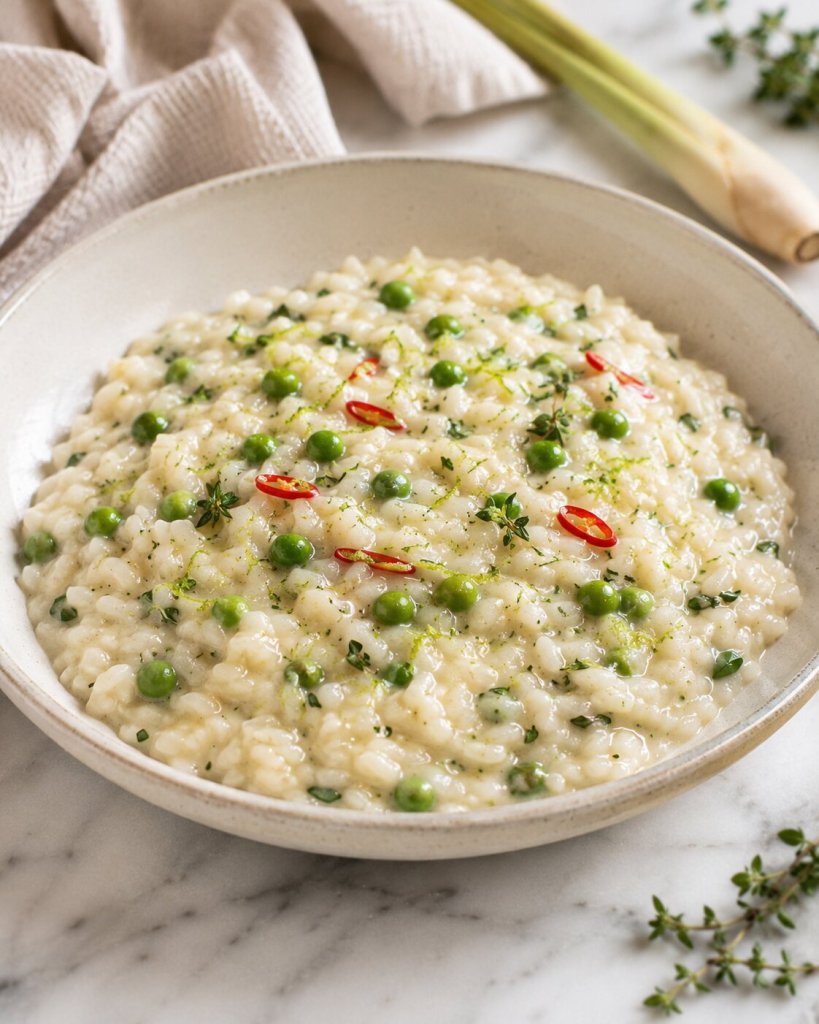
The flavor is simple but layered. Lemongrass and thyme simmer into a quick homemade stock, Arborio rice cooks slowly with the strained broth, and green peas add a little sweetness and color. The coconut milk comes in at the end, making the risotto creamy without weighing it down.
It is a lovely plant-based dinner when you want something cozy but not heavy. Serve it on its own, or pair it with a fresh vegetable side like this Grilled Veggie Salad Recipe for a bright, balanced meal.
Why Lemongrass Works So Well in Risotto
Risotto is naturally a slow, gentle dish, which makes it perfect for delicate aromatics. Lemongrass has time to infuse the stock, giving the rice a light citrus flavor without making the dish sharp or overpowering.
The finished dish is creamy and comforting, but it has enough brightness to feel fresh. It is risotto with a lighter, more aromatic personality.
The Ingredients That Shape the Flavor
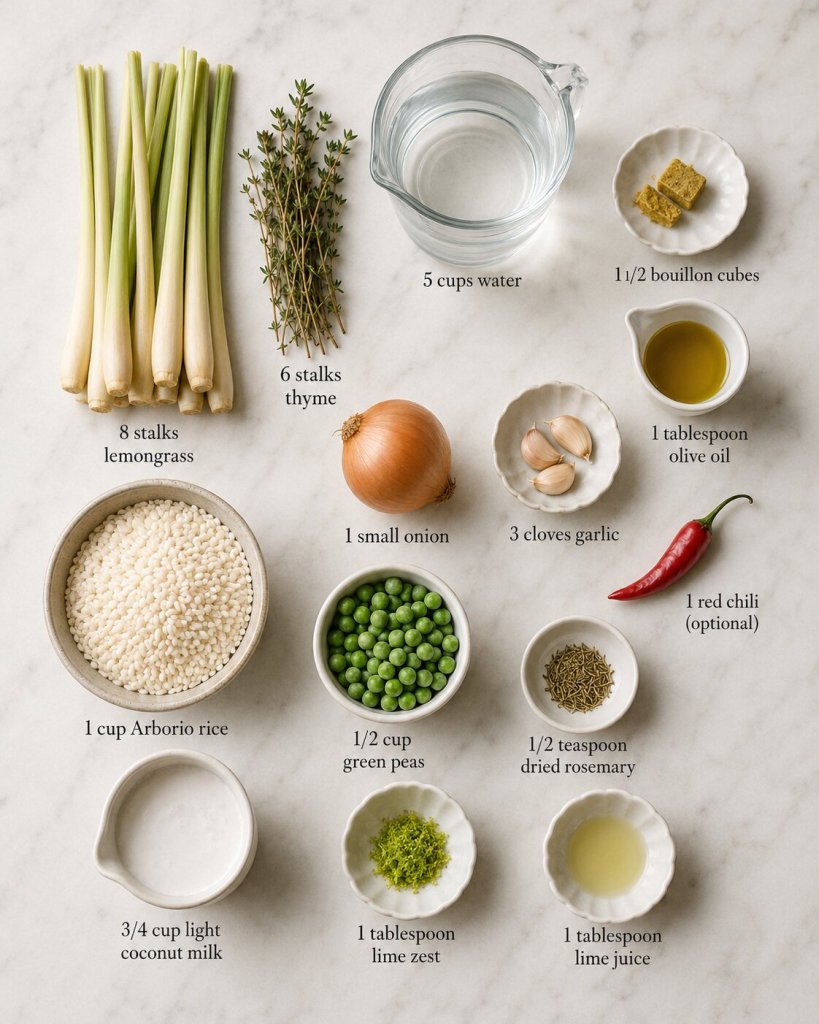
This lemongrass risotto uses everyday ingredients, but the order matters. The stock builds the flavor first, then the rice slowly absorbs it, and the coconut milk finishes the texture.
Keep the Lemongrass Stock Simmering
The stock is the heart of this coconut risotto. Chop the lemongrass, separate the thyme leaves from the stalks, and simmer the lemongrass and thyme stalks with water and bouillon. As the rice cooks, the stock should stay warm on the stove.
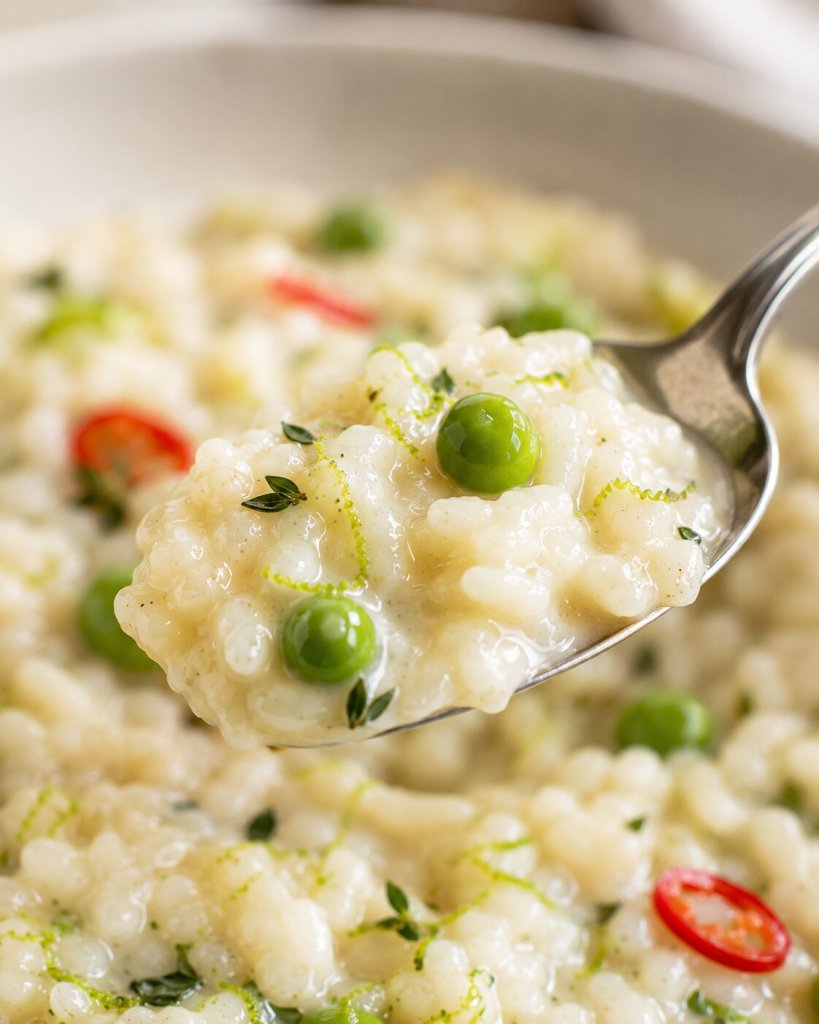
This matters because risotto cooks best when warm liquid is added gradually. If the stock cools down, the rice slows down too, and the texture can become uneven. Keep the stock simmering, strain it as you ladle it into the rice, and let the Arborio rice absorb each addition before adding more.
How to Make Lemongrass Risotto
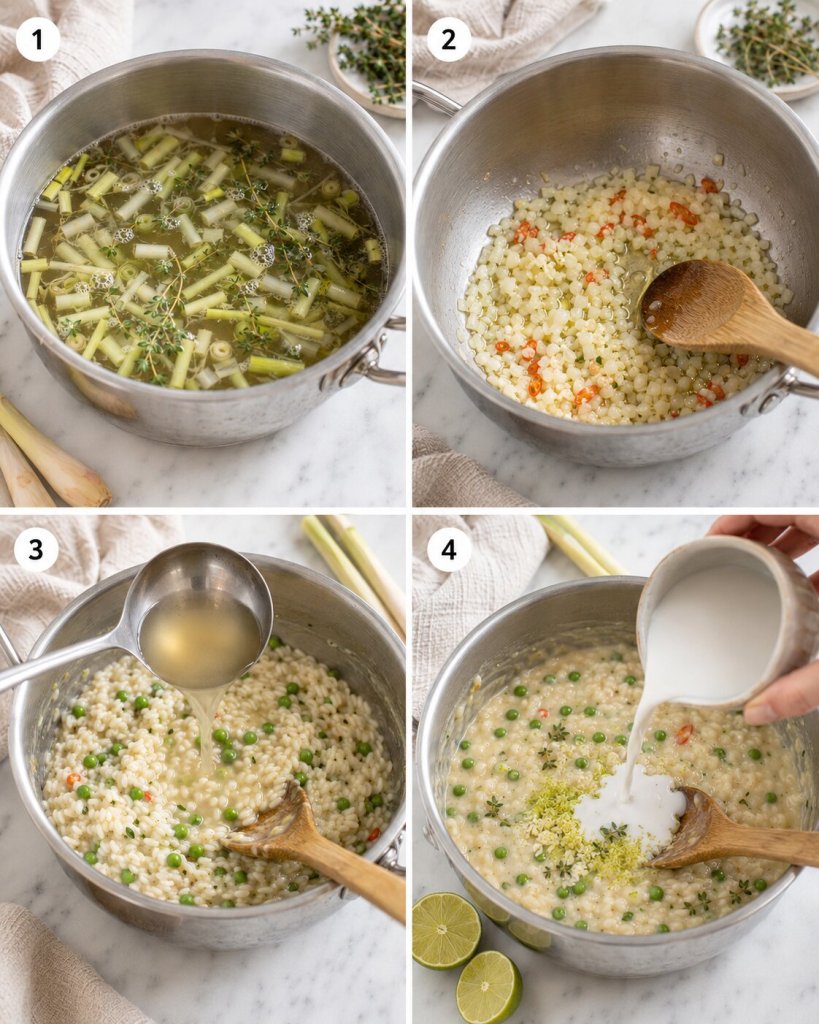
- Chop the lemongrass into small pieces. Separate the leaves from the thyme stalks and reserve the leaves for later.
- Add the water, chopped lemongrass, and thyme stalks to a large stock pot. If using dried or frozen lemongrass, add 1/4 cup instead of fresh stalks.
- Cover the pot and bring the water to a boil. Stir in the bouillon cubes, reduce the heat, and let the stock simmer while you cook the rice.
- In another large pot, heat the olive oil. Finely chop the onion and red chili, if using, and mince the garlic.
- Sauté the onion until translucent. Stir in the garlic and chili.
- Add the Arborio rice, green peas, and dried rosemary. Stir over low heat for a few minutes, until the rice starts sticking slightly to the bottom of the pot.
- Using a strainer, add 2 large ladles of simmering lemongrass stock to the rice. Stir and let the rice absorb the liquid.
- Continue adding strained stock, 2 ladles at a time, stirring and allowing most of the liquid to absorb before adding more. Keep the stock simmering the whole time.
- When the rice is al dente, warm the light coconut milk and stir it into the risotto.
- Add the lime zest and reserved thyme leaves. Once you see bubbles, turn off the heat.
- Drizzle in the lime juice and stir one last time. The risotto should look a little runny at this stage.
- Let the risotto rest for 5 minutes so the rice can absorb more liquid, then serve.
Risotto Tips for the Right Texture
Keep the stock hot: Warm stock helps the rice cook evenly and keeps the process smooth.
Add liquid gradually: Two ladles at a time gives the rice time to release starch and become creamy.
Stir often, but do not panic: Risotto needs attention, not constant stress. Stir after each addition of stock and keep an eye on how quickly the liquid absorbs.
Stop at al dente: The grains should be tender with a little bite in the center, not mushy.
Let it rest: The risotto should look loose when you turn off the heat. After 5 minutes, it will settle into a creamier texture.
Finishing With Coconut Milk, Lime, and Thyme
The final few minutes are where this vegan pea risotto becomes especially creamy and fragrant. Warm the light coconut milk before adding it to the rice so it blends in gently without cooling the pot. Stir in the lime zest and reserved thyme leaves, then turn off the heat once the mixture begins to bubble.
The lime juice goes in last. This keeps the flavor fresh and bright instead of cooked down. At first, the risotto should look a little runny, but that is exactly right. The rice will continue to absorb the liquid as it rests.
“CREAMY, CITRUSY, AND QUIETLY COMFORTING.”
How to Serve Lemongrass Risotto
This lemongrass risotto is satisfying enough to serve as a main dish, especially with the peas and coconut milk. It also works beautifully as a side for a larger plant-based meal.
For a fresh contrast, serve it with crisp greens or charred vegetables. If you want something cozy on the side, these Vegan Cornbread Skillet Biscuits would make the meal feel more generous.
- Serve as a creamy vegan dinner with extra lime on the side.
- Pair with grilled vegetables or a simple salad.
- Add fresh herbs on top if you want a brighter finish.
- Serve in shallow bowls while the risotto is still soft and creamy.
Storing and Reheating Leftovers
Risotto is always creamiest right after it is made, but leftovers can still be very good. Store cooled risotto in an airtight container in the refrigerator.
To reheat, add a splash of water, stock, or coconut milk and warm gently, stirring until the rice loosens again. The texture will be thicker than freshly made risotto, but a little added liquid brings back its creamy feel.
More Plant-Based Dinner Ideas
Lemongrass Risotto FAQ
A Light, Creamy Risotto With a Bright Finish
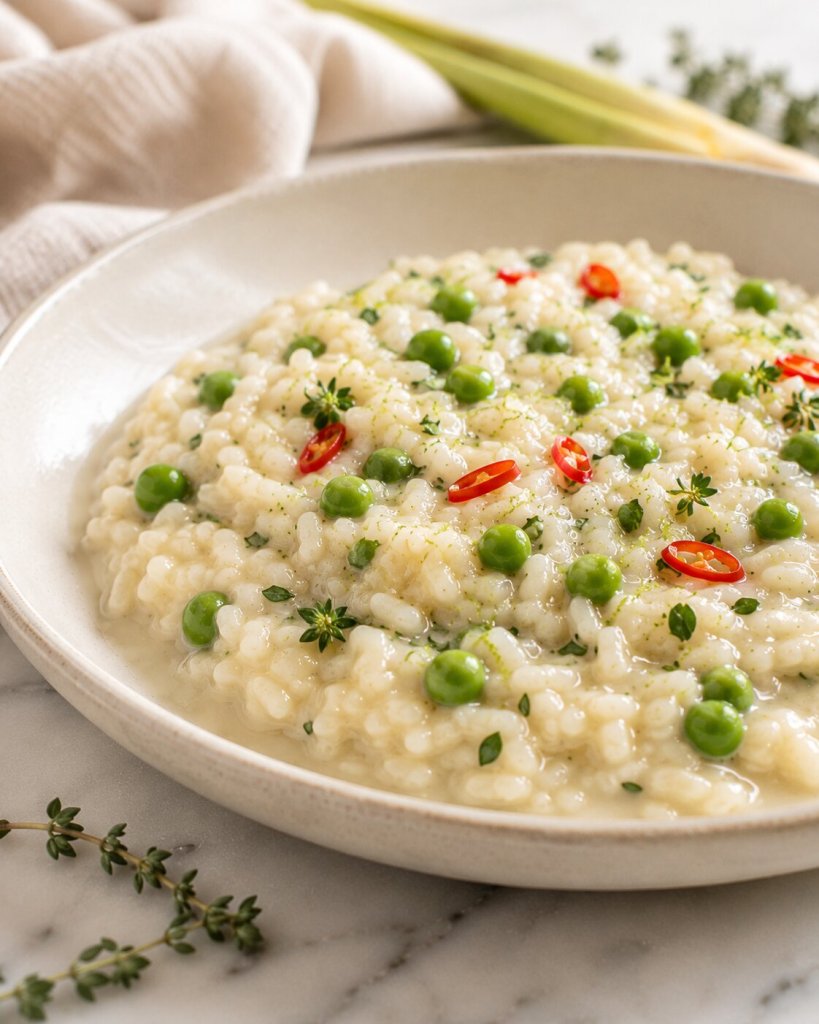
This Lemongrass Risotto is creamy in the way risotto should be, but the lemongrass, lime, thyme, and coconut milk make it feel fresh and a little unexpected. It is comforting without being heavy, and simple enough for a weeknight when you want dinner to feel calm and nourishing.
Serve it after its short rest, while the rice is still soft, glossy, and fragrant.
Lemongrass Risotto
Equipment
- Stock pot
- Large pot
- Fine mesh strainer
- Ladle
- Cutting board
- Chef’s knife
- Wooden spoon
- Small saucepan or microwave-safe cup
Ingredients
Lemongrass Stock
- 8 stalks lemongrass chopped, or use 1/4 cup dried or frozen lemongrass
- 6 stalks thyme stalks and leaves separated
- 5 cups water
- 1 1/2 bouillon cubes bouillon cubes
Risotto
- 1 Tbsp olive oil
- 1 small onion finely chopped
- 3 cloves garlic minced
- 1 red chili finely chopped, optional
- 1 cup Arborio rice
- 1/2 cup green peas
- 1/2 tsp dried rosemary
- 3/4 cup light coconut milk warmed before adding
- 1 Tbsp lime zest
- 1 Tbsp lime juice
Instructions
- Chop the lemongrass into small pieces. Separate the thyme leaves from the stalks, reserving the leaves for later.
- Add the water, chopped lemongrass, and thyme stalks to a large stock pot. If using dried or frozen lemongrass, add 1/4 cup instead of the fresh stalks.
- Cover the pot and bring the water to a boil.
- Stir in the bouillon cubes, then reduce the heat and keep the stock simmering while you cook the rice.
- In another large pot, heat the olive oil over medium heat.
- Add the finely chopped onion and cook until translucent.
- Stir in the minced garlic and chopped red chili, if using, and cook briefly until fragrant.
- Add the Arborio rice, green peas, and dried rosemary. Stir over low heat for a few minutes, until the rice begins to stick lightly to the bottom of the pot.
- Using a strainer, add 2 large ladles of the simmering lemongrass stock to the rice. Stir and let the rice absorb most of the liquid.
- Add 2 more ladles of strained stock and continue stirring. Once most of the liquid is absorbed, repeat the process.
- Keep the stock simmering on the stove the whole time. Do not remove it from the heat while making the risotto.
- Continue adding strained stock and stirring until the rice is cooked al dente, with grains that are soft but still have a little bite.
- Warm the light coconut milk, then add it to the rice while stirring.
- Add the lime zest and reserved thyme leaves. Once the risotto starts to bubble, turn off the heat.
- Drizzle in the lime juice and stir one last time. The risotto should look loose and slightly runny at this stage.
- Let the risotto rest for 5 minutes so the rice can absorb a little more liquid, then serve warm.
Notes
Nutrition
Disclaimer: Our editorial team has used AI to create or enhance parts of this article. All content has been fact-checked by our team to ensure accuracy.